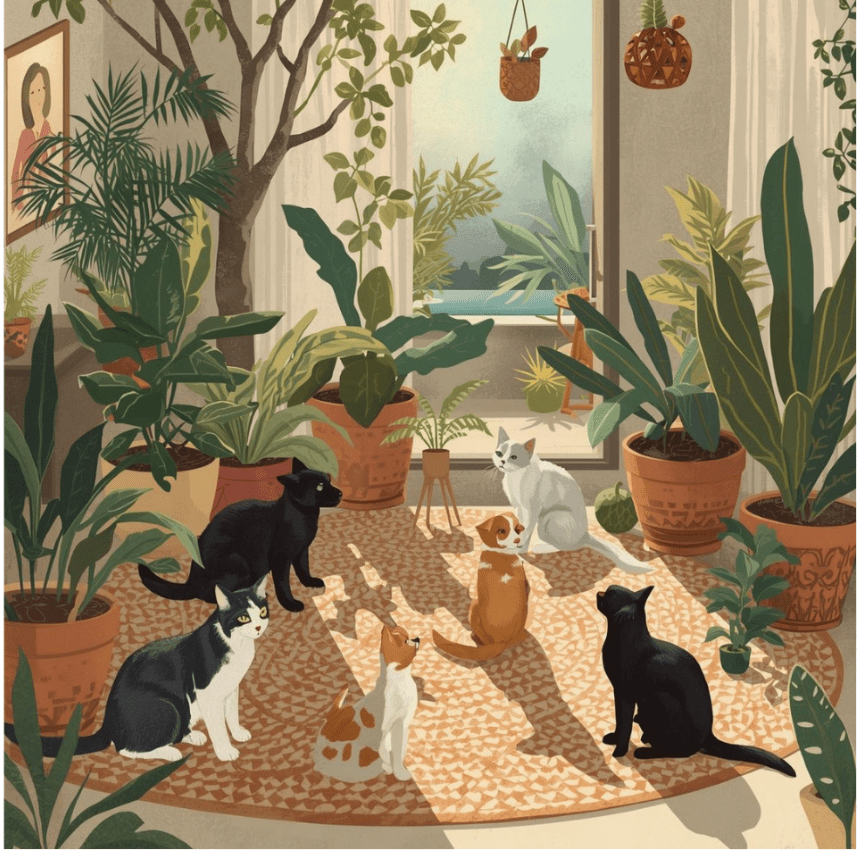
Bringing the beauty of nature indoors is a wonderful way to brighten your home and boost your mood. If you think about it, plants and pets can have very similar effects on our mental health! Endorphins abound when we look at greenery, seeing a small set of studies done about “the presence of green spaces near residential areas can have a positive influence on people’s mental well-being” (Coldwell & Evans, 2018; Squillacioti et al., 2022; Wu et al., 2021 as cited in Li, Chen, Wu, Ta, 2026 ). But if you share your living space with furry friends, a little extra planning goes a long way. Many common houseplants can be toxic to pets, leading to anything from mild upset to serious health issues.
Fear not, fellow plant and pet parents! You don’t have to choose between a greenery-filled home and a pet-safe one. This beginner’s guide will help you navigate the world of pet-safe plants, ensuring both your botanical buddies and animal companions thrive.
Why Pet Safety Matters
Pets, especially curious puppies and kittens, love to explore with their mouths. A quick nibble on a toxic leaf can have unfortunate consequences. Symptoms can vary widely depending on the plant and the amount ingested, but some common signs of plant poisoning in pets include:
- Vomiting and diarrhea
- Lethargy
- Drooling
- Not wanting to eat
- Swelling of the mouth or throat
- Difficulty breathing
- Tremors or seizures
If you suspect your pet has ingested a toxic plant, contact your veterinarian or a pet poison helpline immediately.
Doing Your Homework: Before You Buy!
The most crucial step in creating a pet-safe plant paradise is research. Before you bring any new plant home, always double-check its toxicity to your specific type of pet. Websites like the ASPCA’s plant list are invaluable resources.
Key things to consider:
- Plant Name: Know both the common name and the botanical name (often in italics) for accurate identification.
- Toxicity Level: Is it mildly irritating or severely poisonous?
- Pet Type: A plant safe for a cat might not be safe for a bird, and vice-versa.
General Tips for a Pet-Safe Plant Environment
Even with pet-safe plants, it’s a good idea to take a few extra precautions:
- Elevate Your Plants: Place plants on high shelves, in hanging baskets, or on plant stands that are out of paw’s reach.
- Observe Your Pet: Watch your pet’s behavior around new plants. Some pets are naturally uninterested, while others are notorious nibblers.
- Provide Alternatives: Make sure your pet has plenty of appropriate toys and enrichment to keep them from getting bored and turning to your plants for entertainment.
- Block Access: For particularly persistent pets, consider physical barriers like pet gates or decorative screens.
- Be Mindful of Pesticides/Fertilizers: Even if the plant itself is safe, the chemicals you use on it might not be. Always use pet-safe products and follow instructions carefully.
Li, H., Chen, R., Wu, J., & Ta, N. (2026). How green space quantity and quality across different geographic contexts impact mental health. Cities, 168, 106439. https://doi.org/10.1016/j.cities.2025.106439
 Paws & Petals