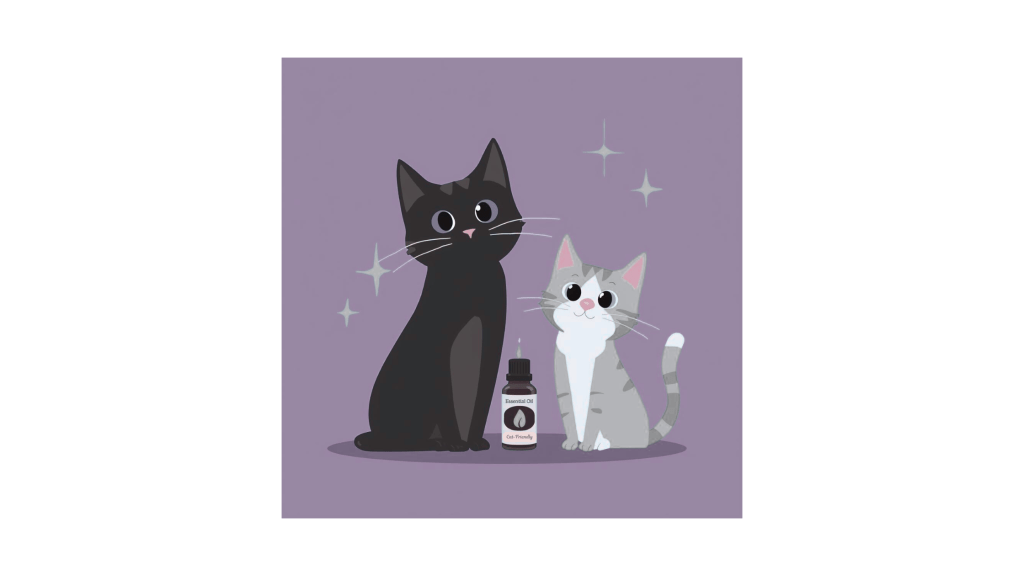
Don’t we all love Yes or No questions? Unfortunately there isn’t an easy answer.
Short answer: They could hurt our furbabies.
Long answer: Though essential oils can hurt our furbabies, there are some that are safer to use. Keep in mind, too much of a good thing can be a bad thing.
Did you know that your favorite essential oil might make your fur-babies sick?
It’s true, and scary.
I was on a normal shopping trip…getting everyday items and coming upon some fantastic smelling essential oils.
As I stood there and smelled all of the smells it never crossed my mind that these could actually be toxic to my cats. I didn’t realize it then, but my purchase of a ylang-ylang essential oil diffuser would cause my favorite kittifur Neo a lot of health issues.
Thank goodness she is better now, but that was no fun lesson to learn!
Even though we want our homes to smell like we just stepped into a spa, it’s important to be careful what smells you use. Cats lack an enzyme in their liver that makes it very difficult to metabolize and eliminate certain toxins.
Potentially ‘Cat-Safe’ Essential Oils
- Lavender Oil – can be calming, relaxing, and soothing
- Frankincense Oil – can be emotionally balancing, bring joint comfort, and support immune wellness
- Cedarwood Oil – grounding, pest-repelling, calming
- Chamomile Oil – soothing, skin-friendly, anti-anxiety
Caution! Essential oils to avoid!
- Tea tree (melaleuca)
- Wintergreen and sweet birch are particularly hazardous because they contain compounds similar to aspirin, which cats cannot process.
- Citrus oils like lemon, orange, lime, bergamot, and grapefruit are also toxic due to their d-limonene content.
- Spices and herbs to avoid include cinnamon, clove, thyme, oregano, sage, basil, tarragon, and rosemary.
- Pine
- Ylang ylang
Use with Caution
If you still want to use essential oils, here’s how to do it with much lower risk:
- Passive Diffusers Only: Avoid “active” ultrasonic diffusers that put micro-droplets of oil into the air, which can land on your cat’s fur.
- Ventilation is Key: Only diffuse in a well-ventilated room that your cat can leave whenever they want.
- No Topical Use: Never apply essential oils directly to a cat’s skin unless specifically directed by a veterinarian with a pet-safe product.
- Store Securely: Keep bottles in a closed cabinet. A knocked-over bottle can lead to a lethal dose via skin absorption or ingestion.
Signs to look out for:
- Fragrance or scent on hair coat, skin, or breath
- Difficulty breathing
- Difficulty walking or uncoordinated gait
- Drooling
- Lethargy or weakness
- Muscle tremors
- Pawing at the mouth or face
- Redness or burns on the lips, gums, tongue, or skin
- Vomiting (you may note the smell of essential oils in the vomit)
It’s often the little things that we need to pay the most attention to. What could have ended very badly for my kittifur thankfully had a happy ending. Take care of your furbabies and they will take care of you!
Check out the ASPCA Poison Control site for more information about poisonous products that may affect our furbabies.
The information provided in this post is for educational and informational purposes only and is not a substitute for professional veterinary advice, diagnosis, or treatment.
Always consult a licensed veterinarian or qualified animal‑health professional regarding any questions you have about your pet’s medical condition or care.
Never disregard professional advice or delay seeking it because of something you have read here. If your pet is experiencing a medical emergency, contact a veterinarian or emergency animal clinic immediately.
 Paws & Petals
Leave a comment