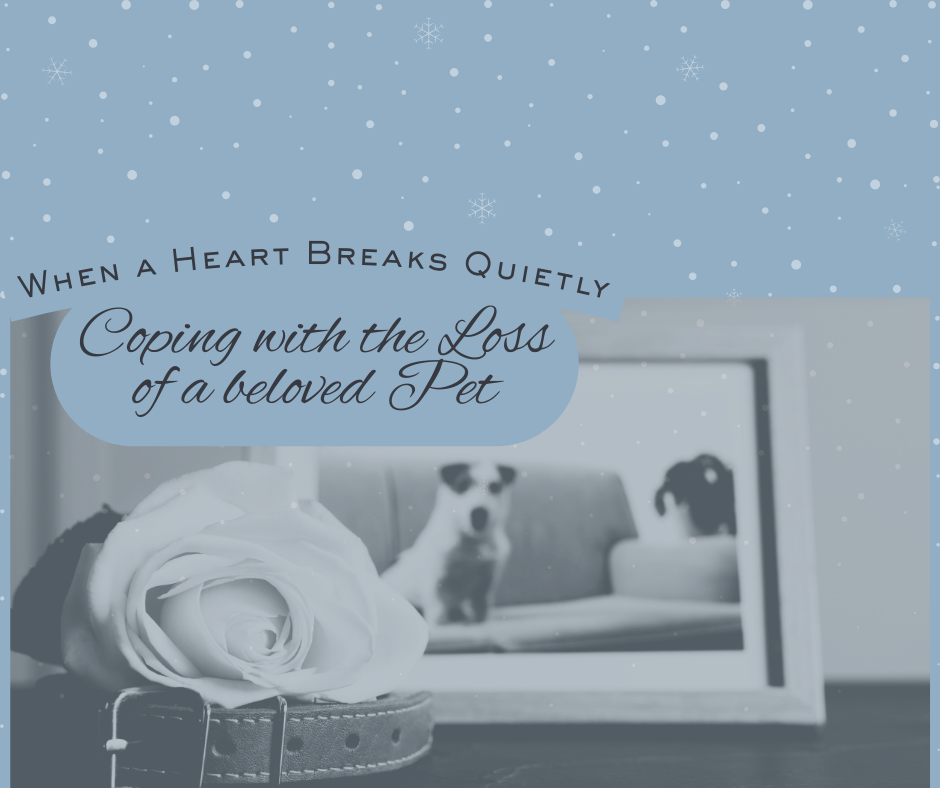
Thinking about a dear friend who recently lost a beloved furry family member. I was going to call that pet a furry friend, but our pets are so much more than just friends.
They are family.
I remember the first time I lost a pet in my adult life. I’m not sure how – but this loss hit me harder than others in the past. Maybe it was because of having had my own children (not furbabies). Suddenly – going through that loss wasn’t just about me. I also had to help my children through it. Cinder was also the first furbaby I had owned with my husband, he was part of our family.
We adopted Cinder before we had our first child. And even though he was a senior cat by the time we had children, he loved and protected them.
We lost him about 15 years ago, but we still talk about him and remember him because it’s an important part of loss.
Let Yourself Grieve—Fully and Without Apology
The bond you had with your pet wasn’t just meaningful, it was unconditional, uncomplicated, and woven into your everyday life.
Some people feel embarrassed about mourning an animal, but there’s nothing “small” about this loss. Give yourself permission to:
- Cry when you need to
- Laugh when a sweet memory surfaces
- Feel angry, numb, confused, or lonely
- Move at a pace that feels right for you
Grief doesn’t follow a schedule. And you don’t have to justify your feelings to anyone.
Create a Space for Memories
Rituals can be surprisingly healing. They help us create meaning during moments that otherwise feel chaotic.
Consider:
- Making a photo album or scrapbook
- Writing a letter to your pet about what you miss
- Creating a small memorial—a framed photo, a paw print, a favorite toy
- Planting a tree or flowers in their honor
- Lighting a candle on anniversaries or special days
These acts don’t trap you in grief—they help transform it into remembrance.
Talk About Your Pet
Say their name. Tell their stories. Share the funny quirks, the mischief, the routines, the little moments that made you smile.
Talking about your pet doesn’t prolong grief—it lightens it by letting the love keep living. Seek out people who understand the depth of the bond you had. There’s comfort in connecting with others who know what it’s like to lose their own animal companion.
Be Gentle with the Void
The hardest part is often the quiet:
- No paws clicking on the floor
- No welcome-home ritual waiting for you
- No presence curled beside you in the evening
That emptiness can feel enormous. Instead of fighting the silence, try acknowledging it: “I miss you. This is hard. But thank you for the years you gave me.”
It’s okay that simple, daily moments now feel heavy. Healing often starts with noticing the hurt rather than trying to outrun it.
Understand That Healing Doesn’t Mean Forgetting
The love you shared doesn’t end because your pet is no longer physically here. Healing doesn’t erase memories—it builds a softer place for them to live.
Over time:
- The sharp edges of the pain soften
- The tears come less often
- The joy of remembering grows stronger than the ache of missing
This is not “moving on.” It’s moving forward with love.
A Final Thought
Your pet’s life mattered. Their presence changed your world, even in small ways. And your grief is simply love with nowhere to go.
Take your time. Honor the memories. Let others support you. And remember—loss is the price we pay for the privilege of loving and being loved in return.
You gave your pet a beautiful life. That’s a legacy worth holding close.
 Paws & Petals
Leave a comment